Make room for useful coaching
Call coaching competes with forecasts, hiring, and deal reviews. Use the time you have to address the behaviors and reviews that need your judgment.
Team coaching
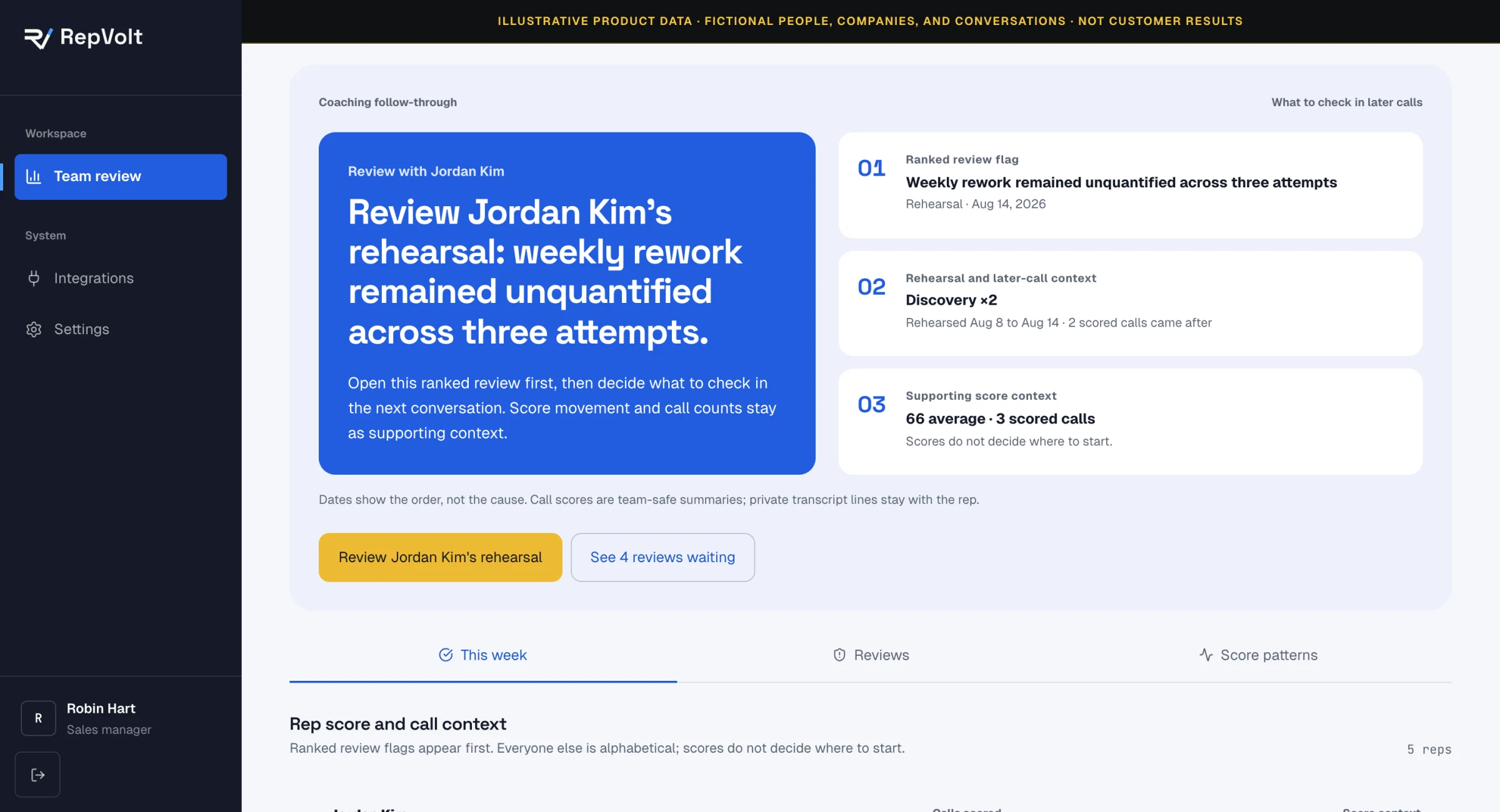
See what needs coaching and how many calls it is based on. Keep score movement as context.
The manager’s side of the screen
Knowing which rep needs you now is harder than finding another call to review. Use their coaching focus and review history to choose where to start.
Call coaching competes with forecasts, hiring, and deal reviews. Use the time you have to address the behaviors and reviews that need your judgment.
See what each rep is working on and which reviews need attention. Call counts and trends add context so you can choose a useful starting point for the next conversation.
Give a new rep a consistent way to review different buyers, objections, and calls. Each completed review gives them something specific to work on before your next coaching conversation.
Return to the rep’s coaching focus in your next 1:1. Their review history and any completed rehearsals help you discuss what they tried and what needs more attention.
Reps choose a change to work on. Managers use that context to prepare a useful conversation and follow up after the next call.
A rep uploads a transcript file or pastes the text to begin a review, without waiting for a manager to listen first.
The rep learns how their approach affected the call and discovers up to three areas to improve. They know which skill to work on first and have examples that explain why it matters.
Paid plans add rehearsal when a practice exercise matches your main coaching need. The rep can try the move with a new fictional buyer before using it on a call.
Use the next review to discuss what the rep tried. Coaching needs, review flags, call counts, and score trends help you decide what to work on together.
Reps can begin before the next 1:1. Managers can see their coaching focus and follow the reviews and rehearsals they complete.
| Call review step | What the rep does | What the manager does |
|---|---|---|
| After a transcript is added | Reads the cited moments and the areas to improve. | Sees the coaching need without replaying the whole call. |
| Before the next call | If the main coaching need has a matching drill, runs it from the saved review and keeps the remaining list in view. | Spends 1:1 time on judgment, not transcript cleanup. |
| When later calls arrive | Compares reviews and decides whether to keep working on the fix. | Uses call counts and score movement as context, not a verdict. |
Use call counts and score trends to add context to the conversation, then decide what the rep should keep working on.
Use RepVolt between training sessions to review calls, work on a specific change, and return to it in the next coaching conversation.
| Decision | Traditional training | RepVolt |
|---|---|---|
| What starts the coaching | A scheduled workshop or whichever call a manager has time to review. | A transcript the rep uploads or pastes when they are ready to review a call. |
| What the rep can verify | Notes from a workshop or manager-led review. | The exact call moment beside the coaching it supports. |
| What happens next | Feedback waits for the next 1:1 or training session. | Areas to improve, plus paid rehearsal when a practice exercise matches your main coaching need. |
| What the manager sees | A small sample of reviewed calls and a lot of manual follow-up. | Who needs coaching, which ranked gap leads, how many calls support the pattern, and what needs review. |
| How progress is checked | A workshop completion or a score with no next-call context. | Later-call evidence, with scores kept as supporting context. |
Upload or paste your team’s call transcripts
Try one call free, with no signup or card. Team costs $24 per seat a month, starting at 3 seats for $72, with monthly billing and cancellation anytime.