Sales call scoring that shows its work
Upload or paste a call transcript. When the transcript supports a coaching note, RepVolt shows the call moment behind it and explains what to improve first. Paid plans add rehearsal when the main coaching need has a matching drill. The 0–100 score stays where it belongs: supporting context.
Fictional discovery call · 18:42
What the call says to work on next
“Sales ops and three regional managers usually reconcile it twice a week.”
Where this rep can improve
- 1
Quantify the weekly rework before presenting a fix
You learned who owns the problem and how often it happens, but not how much work it creates.
- 2
Confirm what the rework delays
Tie the operational drag to the forecast or decision the buyer cares about.
- 3
Close on an owner and a date
Make the follow-up specific enough that both sides know what happens next.
Start with the call evidence, not the number
A score can tell you a call needs a closer look. It cannot tell a rep what to say differently on the next one. Upload or paste a call transcript. RepVolt grounds the useful part in the exact moments that transcript can support.
- Read the moment
When the transcript supports a coaching note, RepVolt shows the call line behind it. The timestamp helps you find the area in the transcript; it is approximate, not independently checked.
- See the areas to improve
The full list stays visible. RepVolt recommends starting with the first item, then using later calls to decide when to move down the list.
- Start the rehearsal when the main coaching need is ready
On a paid plan or trial, when a practice exercise matches your main coaching need, start its short fictional buyer scenario from the review.
- Check a later call
A later transcript adds another real reading. Use it to decide whether to keep the focus, change the approach, or move down the ranked list.
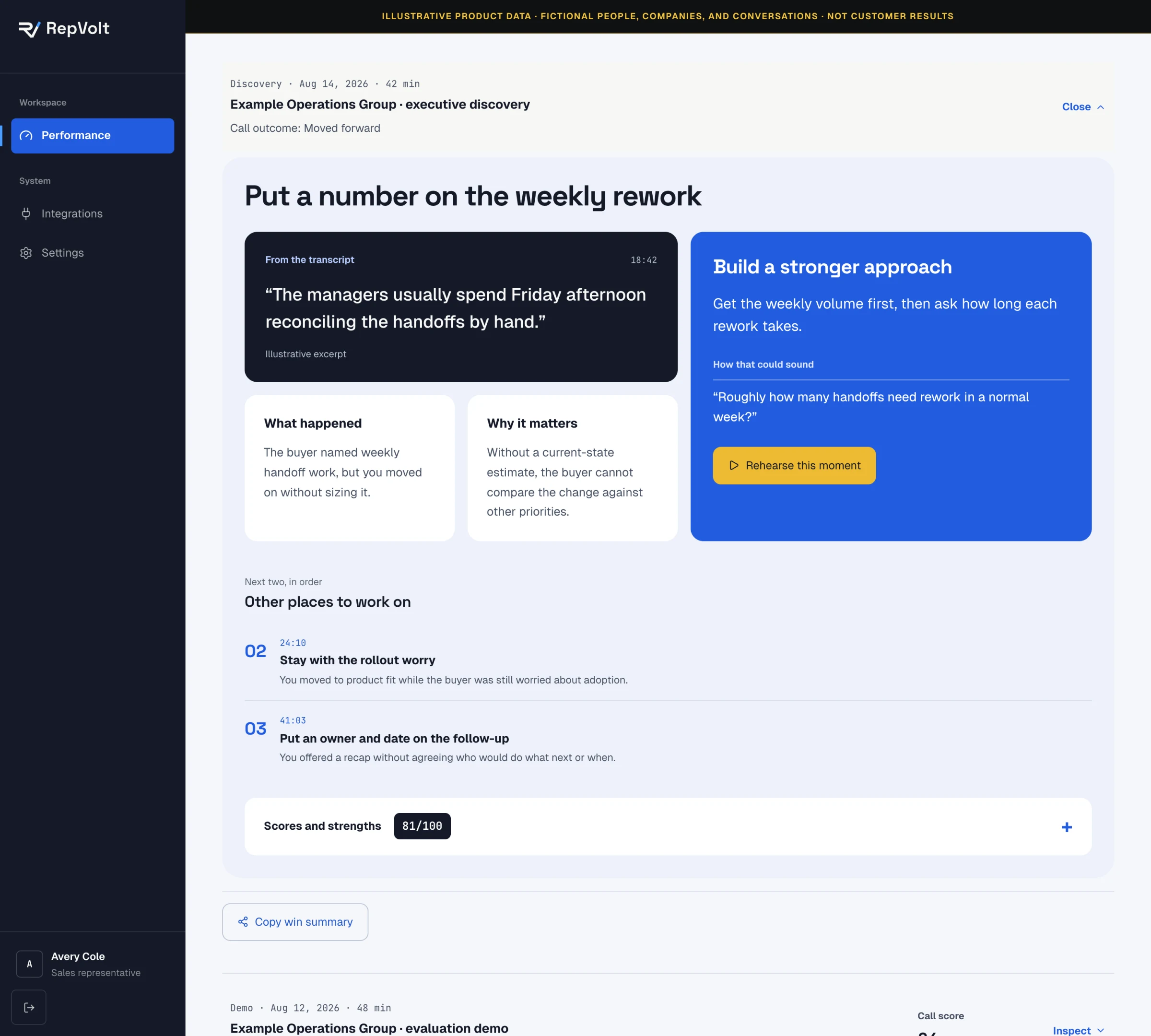
Call evidence
Follow one line from the call through what happened, why it matters, the next move, and the drill.
The scorecard changes with the job of the call
RepVolt does not put an SDR cold call and an AE discovery call through one generic sales checklist. It uses the rep role and call type to choose the criteria that matter for that conversation.
- Cold call
- The opener, early discovery, objection response, and meeting ask matter because the rep is earning the next few seconds and the next step.
- Discovery call
- Agenda, pain, qualification, listening, objection handling, and a specific next step carry more of the job.
- Demo or validation
- The review looks for a clear link between what the buyer said and what the rep chose to show, prove, or validate.
- Negotiation or close
- Objection resolution, commercial discipline, commitment, and the path to a decision matter more than running fresh discovery from the top.
The whole transcript informs the score. The coaching grounded in your call is narrower: a note stays only when RepVolt can point to the words that support it.
The 0–100 score is context, not the coaching plan
61 / 100
One number summarizes how that transcript performed across the selected scorecard. Use the skill breakdown to see what pulled the summary up or down, then use the cited moments and areas to improve to choose the work.
Across several calls, a score trend can tell you where to look. It does not prove a rehearsal, manager conversation, or any other single event caused the change. Check how many calls the trend is based on and read the underlying moments before drawing a conclusion.
Compare a rep to their own calls under the relevant scorecard. RepVolt does not present the number as an industry ranking, a forecast, or a replacement for manager judgment.
Manager judgment and AI call scoring do different jobs
RepVolt helps a manager find the calls and skills that deserve attention. The manager still supplies deal context, motivation, strategy, and the judgment to decide what the team should do about it.
| Part of the review | Manager | RepVolt |
|---|---|---|
| What starts the review | Chooses a call and listens or reads | Reads each completed transcript you submit |
| Evidence | Can listen for tone and add deal context | Shows the transcript line behind supported coaching |
| Scoring | Can adjust for context outside the transcript | Uses the right scorecard for the rep and the call |
| Coaching order | Decides what matters for the rep and deal | Shows what to improve, using examples from the call |
| Practice | Can coach live, roleplay, and add nuance | Opens paid rehearsal when a practice exercise matches your main coaching need |
| Follow-through | Judges whether the behavior fits the real situation | Shows another reading when a later transcript is submitted |
Upload or paste a call transcript
The free analysis and paid workspace both accept a common transcript file or pasted text. One free analysis needs no signup and no card. You will see cited call moments, up to three areas to improve, an example of a stronger approach when the call supports it, and a supporting score below the coaching. The free analysis stops before rehearsal. Paid plans add rehearsal when a practice exercise matches your main coaching need.
Analyze one call freeQuestions about sales call scoring
How accurate is AI call scoring?
Treat the 0–100 score as coaching context, not a verdict. RepVolt uses the scorecard for the rep's role and the kind of call, then shows the coaching grounded in your call drawn from that call. The whole-call score stays separate from those cited notes. If the transcript is too thin to support a specific note, RepVolt drops that note instead of filling the gap. A manager still brings deal context and judgment the transcript cannot provide.
What call formats does RepVolt support?
A completed sales call transcript. The free analysis and paid workspace both accept pasted text or a transcript file in PDF, DOCX, TXT, JSON, Markdown (.md/.markdown), CSV, TSV, VTT, or SRT format, up to 10 MB. On a paid plan or trial, you can also sync a completed transcript from Fireflies or have another recorder send completed transcript text through your secure transcript connection. RepVolt does not accept audio, record calls, or transcribe recordings.
Does every call use the same scorecard?
No. An SDR cold call is not reviewed like an AE discovery call, a demo, or a negotiation. RepVolt selects the scorecard from the rep role and call type so the score reflects the job that conversation needed to do. Team playbook context can add another useful lens without turning every call into the same checklist.
Does a higher score on a later call prove the rehearsal worked?
No. A later call gives you another reading. Dates show what happened before and after, not what caused the change. Use the cited moments, the number of calls behind the trend, and a manager conversation before deciding whether to keep the same coaching focus or move to the next area to improve.
How does scoring work for team managers?
On the Team plan, managers see each rep's scores over time, a skill-by-skill breakdown, how many calls that view is based on, and review flags. That helps a manager decide who needs their judgment next. Reps keep their raw transcripts and quote-level coaching private by default.